Engineered Mineral Performance. Delivered with Precision.
Premium Rotary Kiln Calcined Kaolin Clay engineered for thermal stability, structural strength, and long-term industrial reliability.
Manufactured through controlled high-temperature rotary kiln processing, our material is purpose-built for superior performance in refractory bricks and refractory grade cement applications — where failure is not an option.
Empowering Multiple Sectors
Every industry needs stronger foundations. At PRPL, our engineered calcined kaolin clay transforms raw mineral into high-performance solutions that fuel growth in manufacturing and infrastructure. We deliver the reliability industries need today while supporting sustainable material development for tomorrow.
Refractory Cement
Read More...
Engineered input material for high-alumina refractory bricks, delivering superior thermal resistance, chemical stability, and structural integrity in high-temperature applications
Refractory bricks
Read More...
An essential base material for high-alumina refractory bricks, offering high refractoriness, low impurity levels, and enhanced resistance to thermal shock and chemical degradation
Performance Advantages
Low Apparent Porosity
Low Alkali Content
High Bulk Density
High Refractoriness
ENHANCES THERMAL RESISTANCE AND REDUCES HEAT PENETRATION.
Rotary Kiln Calcined Kaolin Clay is engineered with optimized apparent porosity to balance strength and insulation performance.
Lower open pore volume:
- Reduces heat penetration
- Enhances thermal resistance
- Enhances chemical resistance
- Improves compressive strength in cement systems
PREVENTS HARMFUL REACTIONS IN CEMENT SYSTEMS.
The naturally low calcium oxide and alkali oxide content of Rotary Kiln Calcined Kaolin Clay minimizes harmful internal reactions.
This directly:
- Reduces the risk of Alkali–Silica Reaction (ASR) in concrete
- Prevents chemical corrosion in refractory linings
- Improves long-term structural integrity
- Supports sustainable clinker replacement in cement
IMPROVES MECHANICAL STRENGTH AND STRUCTURAL RELIABILITY.
With a bulk density of ≥2.42 g/cm³, our material enables :
- Superior particle packing
- Higher load-bearing capacity
- Reduced shrinkage and permeability
Improved dimensional stability
ENSURES SUPERIOR THERMAL STABILITY.
The consistent PCE rating reflects :
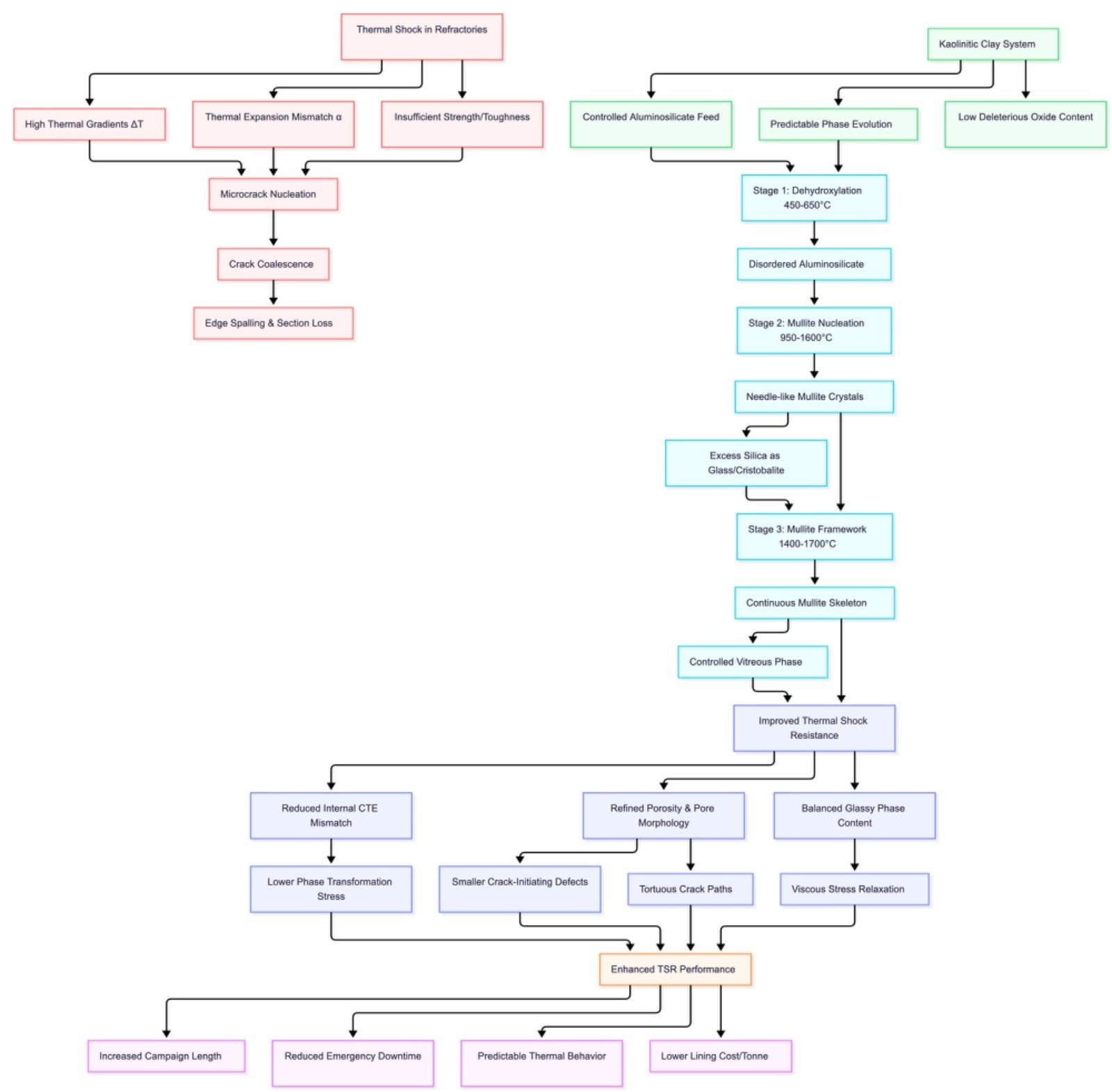
- Stable mullite formation during calcination
- High alumina–silica balance
- Resistance to thermal deformation
- Predictable high-temperature behavior
HIGH
REFRACTORINESS
THERMAL SHOCK RESISTANCE
SUPERIOR DIMENSIONAL STABILITY
LOW APPARENT
POROSITY
MAINTAINS PERFORMANCE UNDER EXTREME TEMPERATURES
The mullite-rich mineralogy of Calcined Pyrophyllite provides excellent thermal stability and refractory performance in high-temperature applications.
This directly:
- Maintains structural integrity at elevated temperatures.
- Resists thermal deformation and softening.
- Supports reliable refractory performance under continuous heat exposure.
- Extends service life in demanding thermal environments.
RESISTS CRACKING DURING THERMAL CYCLING
The mullite-rich microstructure helps accommodate thermal stresses generated during rapid heating and cooling cycles.
This directly:
- Reduces crack initiation and propagation.
- Minimizes spalling during temperature fluctuations.
- Improves reliability during repeated heat-up and shutdown cycles
- Enhances refractory lining life under cyclic operating conditions.
MAINTAINS SHAPE AT ELEVATED TEMPERATURES
The calcination process produces a stable mullite -bearing structure with reduced firing shrinkage and improved dimensional control.
This directly:
- Minimizes warpage and distortion during service.
- Improves shape retention at high temperatures.
- Ensures consistent dimensional accuracy.
- Supports stable long-term refractory performance.
REDUCES PENETRATION AND DEGRADATION
The dense fired structure with Apparent Porosity ≤ 2.0% limits open pathways for the ingress of aggressive materials.
This directly:
- Restricts heat penetration.
- Resist thermal shock damage
- Improves hot-face surface integrity.
- Enhances durability in demanding service.
Our Products
At PRPL, we specialize in rotary kiln–calcined kaolin clay engineered for strength, durability, and long-term reliability in demanding industrial environments.
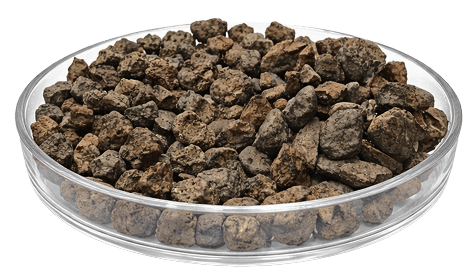
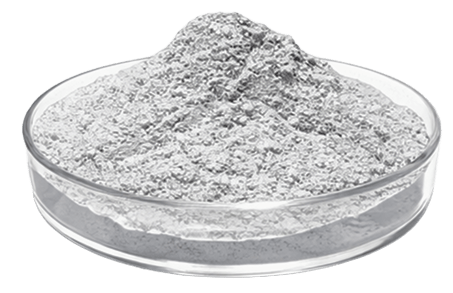
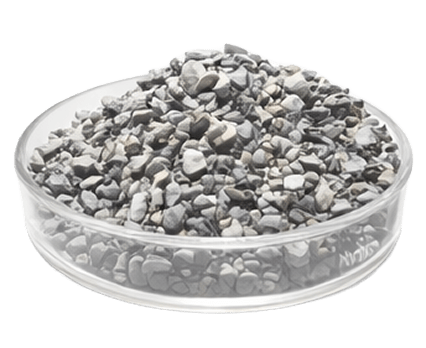
Calcined Clay
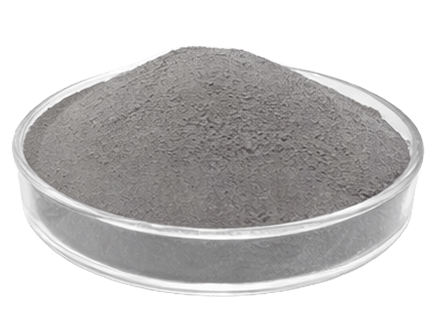
Calcined Clay
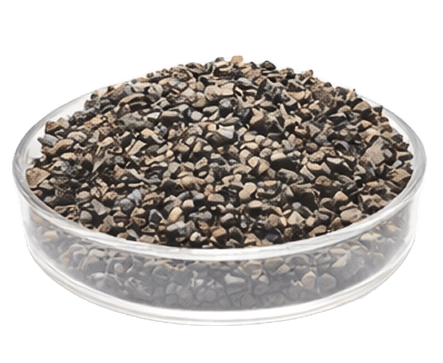
Calcined Clay
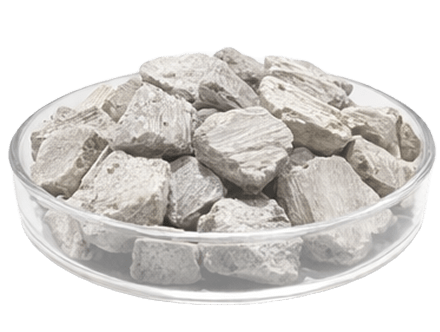
Calcined Pyrophyllite
FREQUENTLY ASKED QUESTIONS
What type of kiln do you use?
We use an advanced rotary kiln for the production of our calcined kaolin clay. Our manufacturing follows a continuous production process, which ensures consistent thermal treatment throughout. This technology is central to achieving the optimal purity, controlled mineralogy, and exceptional pozzolanic reactivity that our products are known for — consistently meeting the demanding standards of the refractory and cement industries.
At what temperature do you calcine the product?
Our continuous production process operates at high temperatures across different stages, depending on the target product specification:
For bulk density and structural transformation: Raw kaolin is subjected to controlled thermal treatment at 1450°C to 1500°C, inducing complete dehydroxylation and the formation of mullite and other high-temperature phases, resulting in a dense, thermally stable material with a bulk density of 2.42 g/cm³.
For apparent porosity control and PCE performance: The process runs at 1550°C to 1600°C, promoting complete mineralogical transformation and achieving an optimal apparent porosity of 6–7%.
This precise temperature management throughout our continuous process is what gives our calcined kaolin clay its superior mechanical strength, thermal resilience, and chemical stability.

What fuel is used?
Our rotary kiln is fired using petroleum coke (pet coke) — a high-carbon, high-calorific fuel that delivers the intense and sustained heat required for our high-temperature calcination process. Pet coke enables us to consistently achieve and maintain the precise temperatures needed across our continuous production process, ensuring uniform mineralogical transformation and reliable product quality at every stage.
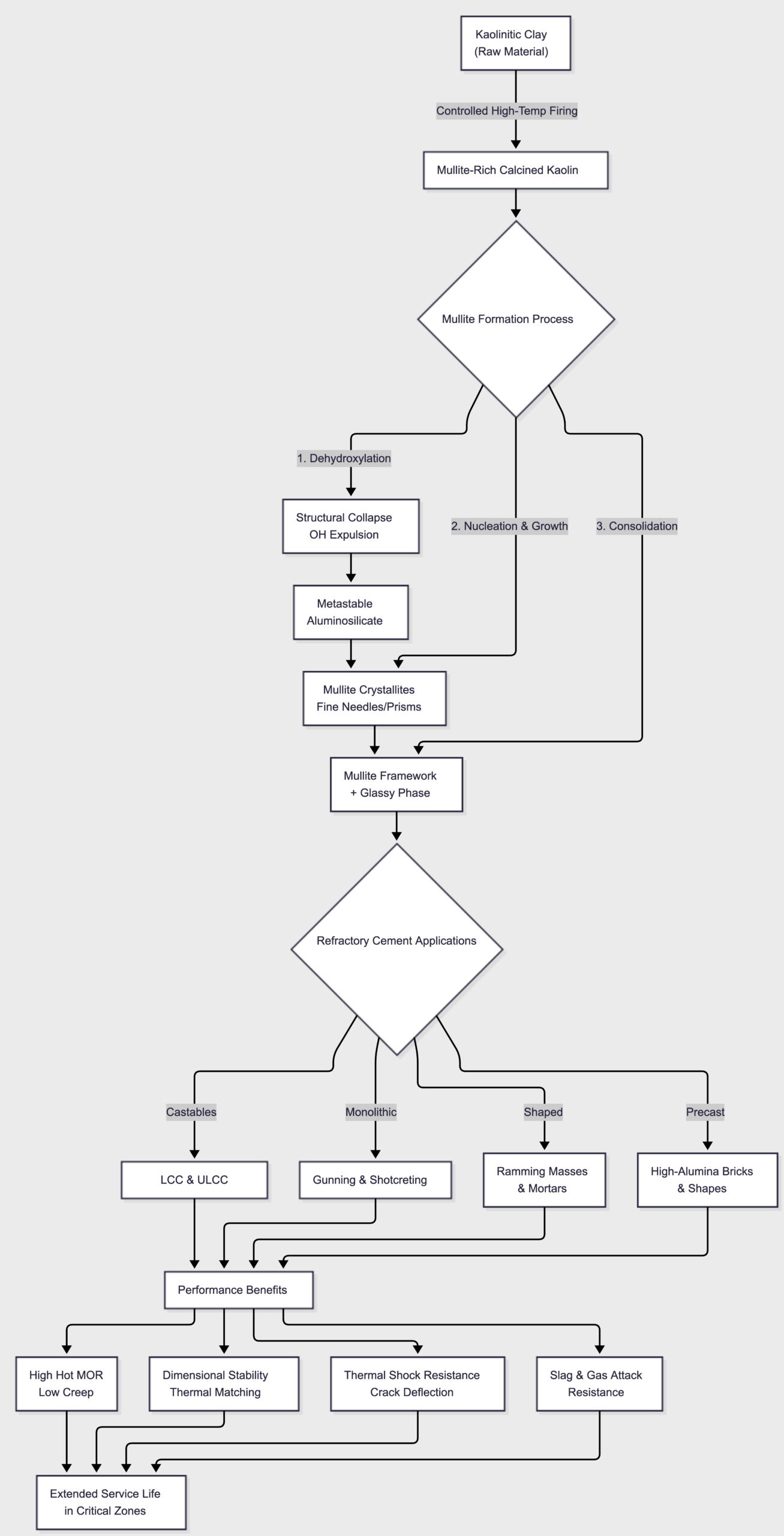
What is the process to form mullite?
In our rotary kiln operation, mullite formation takes place during high-temperature calcination of kaolin clay. First, kaolinite loses chemically bound water and converts into a reactive phase. As the kiln temperature rises and the material receives sustained heat treatment, alumina and silica within the clay reorganise and react to form mullite crystals. This controlled thermal transformation gives calcined kaolin clay its high refractory strength, thermal stability, and resistance to thermal shock.
Group Of Company
CALDERYS INDIA REFRACTORIES LIMITED
IFGL REFRACTORIES LIMITED
CALDERYS INDIA REFRACTORIES LTD (ODISHA)
MAHAKOSHAL REFRACTORIES PRIVATE LIMITED
CALDERYS STEELCASTING INDIA PVT. LTD.
RHI MAGNESITA INDIA LIMITED
SAIL REFRACTORY COMPANY LIMITED
CALDERYS INDIA REFRACTORIES LIMITED
IFGL REFRACTORIES LIMITED
CALDERYS INDIA REFRACTORIES LTD (ODISHA)
MAHAKOSHAL REFRACTORIES PRIVATE LIMITED
CALDERYS STEELCASTING INDIA PVT. LTD.
RHI MAGNESITA INDIA LIMITED
SAIL REFRACTORY COMPANY LIMITED
What’s New At prpl
The latest products, services, news, and announcements from West Bengal premier provider of railcar products and services.